New Patient Offer - Exam, X-Ray & Teeth Cleaning in Just $69


The Benefits of dental CT Scanning: Why It’s Essential for Accurate Diagnosis

by Dr. Sahota
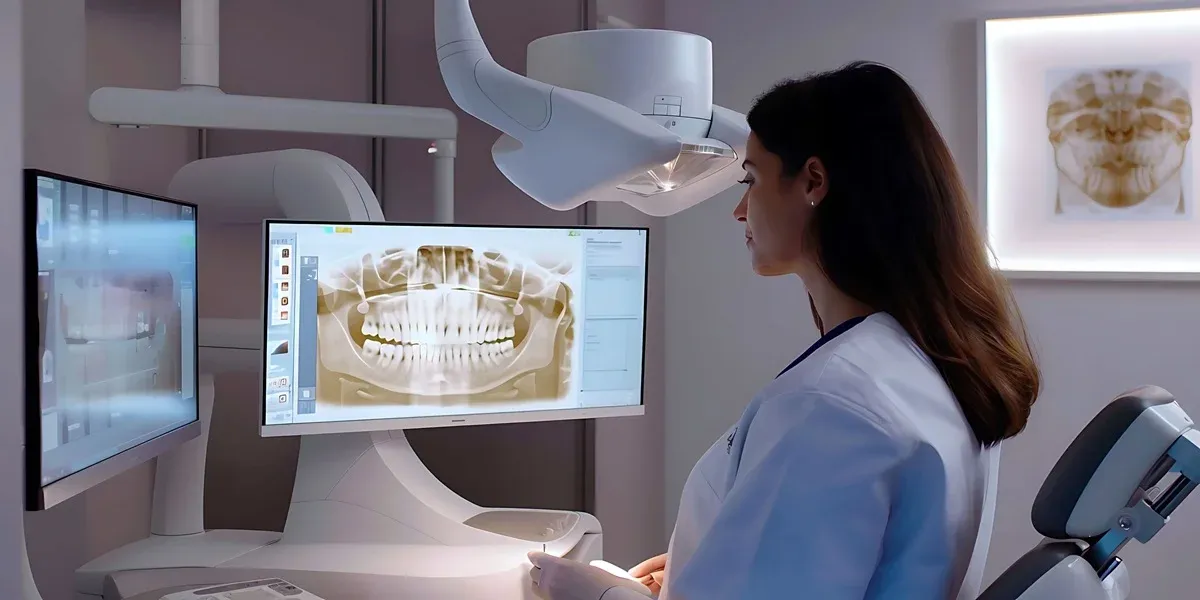
Why Precision Matters in Dental Care
Have you ever had a toothache but weren’t sure what was causing it? You visit the dentist, and they take an X-ray, but it doesn’t reveal the complete picture. That’s where CT scanning (Cone Beam Computed Tomography) comes in. This advanced technology provides a detailed 3D view of your teeth, jaw, and nerves, allowing your dentist to diagnose and treat the issue accurately.
In dental care, precision is everything. A clear diagnosis means less guesswork, fewer complications, and a faster path to relief. Whether you need a dental implant, wisdom tooth extraction, or a root canal, a CT scan ensures your treatment is safe, effective, and tailored to your needs.
Many dental clinics across the U.S. now use CBCT technology to improve patient care. Unlike traditional X-rays, which provide a flat, two-dimensional image, CT scans capture a 360-degree view of your mouth. This detailed perspective helps dentists detect problems early and create more accurate treatment plans, leading to better long-term results.
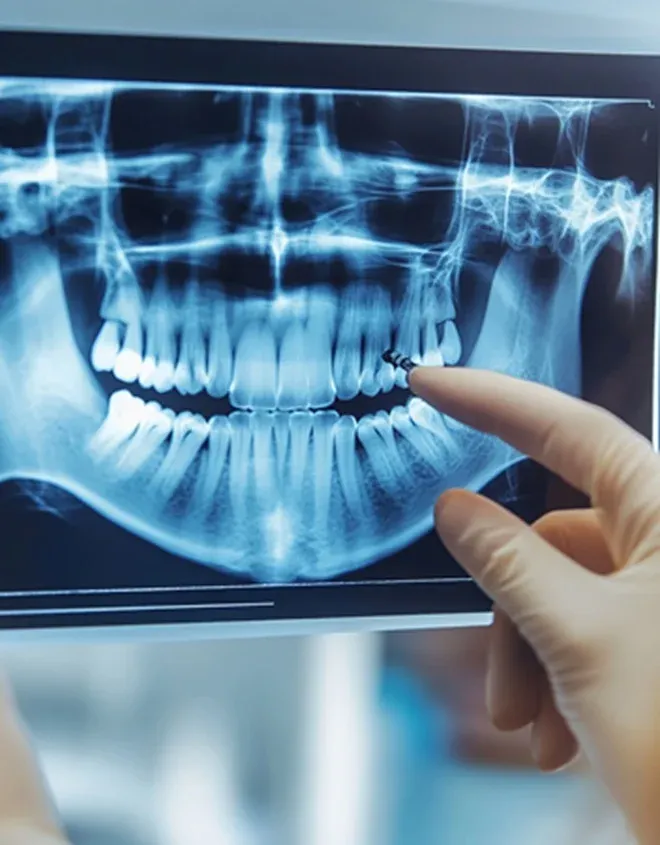
What is CBCT Scanning, and How Does It Work?
CT scanning, or Cone Beam Computed Tomography (CBCT), is an advanced imaging technology that gives dentists a complete, three-dimensional view of your teeth, jawbone, nerves, and soft tissues. Unlike traditional dental X-rays showing a flat, two-dimensional image, a CT scan provides a much clearer and more detailed picture. This allows your dentist to see things that might otherwise go unnoticed, leading to more precise diagnoses and better treatment planning.
For patients learning more about cone beam CT imaging and 3D dental scans, these technologies provide detailed views that can help dentists evaluate teeth, bone, nerves, and surrounding structures. Three-dimensional imaging can be particularly useful when planning procedures that require a closer look at the patient’s oral anatomy.
The process is quick, comfortable, and completely non-invasive. You simply sit or stand while the CBCT machine rotates around your head, capturing multiple images from different angles. These images are combined in just a few seconds to create a highly detailed 3D model of your mouth. There’s no need for uncomfortable bitewings or multiple X-rays—just one scan provides all the information your dentist needs.
One of the most significant advantages of CT scanning is its ability to show the exact position of teeth, roots, nerves, and bone structure. This is especially helpful for treatments like dental implants, wisdom tooth extractions, root canals, and orthodontics. By having a full 360-degree view, your dentist can plan procedures with pinpoint accuracy, reducing the risk of complications and ensuring the best possible results.
Many modern dental clinics in the U.S. have adopted CBCT technology because it makes treatments safer, faster, and more effective. With lower radiation exposure than medical CT scans and a simple, painless process, it’s an invaluable tool for patients and dentists.

Common Uses of CBCT in Dentistry
CBCT can be used in several areas of dental care when three-dimensional information is needed.
Dental Implant Planning
CBCT can help dentists evaluate available bone and identify structures such as nerves and sinuses before implant placement. This information can support treatment planning and help determine the appropriate position and approach for an implant.
Wisdom Tooth Evaluation
When an impacted wisdom tooth is close to important anatomical structures, CBCT may provide additional information about its position and relationship to nearby nerves or other structures.
Root Canal Assessment
CBCT may be considered when conventional dental X-rays do not provide enough information to evaluate complex root anatomy or other endodontic concerns.
Evaluation of Jaw and Facial Structures
Three-dimensional imaging can help dentists assess certain conditions involving the jaw, face, impacted or abnormal teeth, and other oral structures.
The FDA lists dental implant planning, evaluation of abnormal teeth, jaw and facial evaluation, endodontic diagnosis, and dental trauma among clinical applications for dental CBCT.
What to Expect During a CT Scan Appointment
The process is quick, painless, and straightforward for patients who have never had a CT scan. Unlike traditional X-rays requiring bitewings or multiple exposures, a CT scan captures a complete 3D image of your teeth and jaw in seconds.
When you arrive at the clinic, your dentist or technician will guide you to the CBCT machine. You may be asked to remove any metal objects, such as earrings or glasses, to avoid interference with the imaging. Depending on the machine, you will either sit or stand while the scanner rotates around your head. The scan takes about 10 to 40 seconds, during which you’ll need to remain still to ensure a clear image.
There’s no discomfort, and no preparation is needed beforehand. Unlike medical CT scans, there is minimal radiation exposure, making it a safe option for most patients. Once the scan is complete, your dentist will review the images and explain the findings, helping you understand any necessary treatment plans.
Patients can feel more comfortable and confident about the process by knowing what to expect. Now that we’ve covered all the key aspects of CT scanning in dentistry let’s summarize why this technology is a game-changer in modern dental care.
Dental CBCT Safety and Radiation Exposure
Dental cone-beam CT provides detailed three-dimensional images, but it also involves radiation exposure. Patients and practices can refer to FDA information about dental cone-beam CT to better understand radiation considerations and the appropriate clinical use of this imaging technology. CBCT is generally used when the additional information it provides can help with diagnosis or treatment planning and cannot be obtained adequately through conventional dental X-rays.
The FDA and American Dental Association recommend that dental X-ray examinations, including CBCT, be performed when necessary for the diagnosis or treatment of disease. Dentists may consider whether conventional X-rays or other imaging methods can provide the information needed with less radiation exposure. When CBCT is appropriate, imaging settings can also be optimized based on factors such as the patient’s size, the area being scanned, and the clinical reason for the examination.
How CT Scans Improve Dental Treatments for Patients
CT scanning goes beyond basic X-rays by offering a detailed 3D view of your teeth, jaw, and nerves. This level of precision helps dentists diagnose problems early, plan treatments accurately, and reduce complications. Here’s how it enhances standard dental procedures:
Early and Accurate Diagnosis
CT scans reveal hidden issues like infections, cysts, and bone loss that standard X-rays might miss. Catching these problems early leads to faster, less invasive treatments.
Better Planning for Dental Implants
Successful implants depend on precise placement. For dental implant treatment in Livermore, three-dimensional CT imaging may be used to evaluate the available bone, identify the location of important structures such as nerves and sinuses, and help the dentist plan implant placement based on the patient’s individual anatomy.
3D iTero Scanning for Dental Implants
While CBCT provides three-dimensional images of the internal structures of the jaw, 3D iTero scanning for dental implants focuses on the surface of the teeth, gums, and surrounding oral structures. An iTero scan can create a detailed digital impression that may assist with designing and planning the replacement teeth. These technologies serve different purposes and may be used together when both the underlying anatomy and oral surfaces need to be evaluated.
Safer Wisdom Tooth Extractions
IImpacted wisdom teeth can sometimes be located close to important nerves or other anatomical structures. When conventional imaging does not provide enough information, a CBCT scan may provide a more detailed view of the tooth's position and surrounding anatomy to support treatment planning.
CBCT vs. Regular Dental X-Rays
Regular dental X-rays and CBCT both use X-rays, but they produce different types of images and serve different diagnostic purposes.
Regular Dental X-Rays
Traditional and digital dental X-rays provide two-dimensional images. They are useful for many routine dental examinations and can provide diagnostic information with less radiation exposure than CBCT in many situations.
CBCT
CBCT creates three-dimensional images of the scanned area. This can provide additional information about the relationship between teeth, roots, bone, nerves, and other anatomical structures.
CBCT is therefore not simply a replacement for regular X-rays. The appropriate imaging method depends on the clinical question. If a regular X-ray can provide the information needed, a CBCT scan may not be necessary.
CBCT vs. iTero Scanning
CBCT and iTero scanning are both digital technologies, but they capture different types of information.
CBCT: Provides three-dimensional information about internal and underlying anatomical structures, including teeth, jawbone, and certain surrounding structures.
iTero: Creates a digital impression of the oral surfaces, including teeth and soft-tissue contours, and can assist with digital treatment planning and the design of restorations or replacement teeth.
For implant treatment, these technologies may complement each other. CBCT can help the dentist evaluate the underlying anatomy, while iTero can provide detailed digital information about the oral surfaces and planned restoration.
FAQ
Still have a Question? Contact Us
No. CBCT is not required for every patient. It should be recommended when the additional three-dimensional information is clinically necessary and the expected benefit justifies the radiation exposure. If a lower-exposure imaging method can provide sufficient information, CBCT may not be needed.
No. Regular dental X-rays produce two-dimensional images, while CBCT creates three-dimensional images of the scanned area. The two technologies can serve different purposes, and CBCT is generally reserved for situations where additional information is needed.
Yes. CBCT uses X-rays and therefore involves radiation exposure. Dental CBCT generally uses less radiation than medical CT examinations but typically more than conventional dental X-rays. The scan should be used when clinically justified.
No. The scan itself is generally non-invasive and does not involve needles or injections. You simply need to remain still while the machine captures the images.
How CT Scanning is Transforming Dental Care
CT scanning has revolutionized modern dentistry by providing highly detailed 3D images that improve diagnosis, treatment planning, and patient care. Unlike traditional X-rays, which offer limited views, CT scans give dentists a complete picture of the teeth, jaw, nerves, and surrounding structures, allowing for safer and more precise treatments. Whether it’s for dental implants, root canals, wisdom tooth extractions, or orthodontic work, this technology helps reduce complications and enhances treatment success. If you need a dental procedure that requires detailed imaging, choosing a clinic that offers CT scanning can make all the difference in your treatment experience.
Contact your dentist in Livermore today, Dr. Sahota, at One Dental Livermore, to learn more about the Benefits of CT Scanning: Why It’s Essential for Accurate Diagnosis.
Resource:
Why 3D iTero Scanning is a Game-Changer for Your Dental Implants
Share This:
Disclaimer
This media/content or any other on this website does not prescribe, recommend, or prevent any treatment or procedure. Therefore, we highly recommend that you get the advice of a qualified dentist or other medical practitioners regarding your specific dental condition.
Discover the difference of personalized care that prioritizes your health and well-being at

Working Hours
Monday: 8:30AM - 5:30PM | Tuesday: 8:30AM - 5:30PM Wednesday: 7:40AM - 4:30PM | Thursday: 8:30AM - 5:30PM Friday: 8:30AM - 5:00PM


