New Patient Offer - Exam, X-Ray & Teeth Cleaning in Just $69


How Orthodontists and General Dentists Approach Invisalign Differently

by Dr. Sahota

Invisalign has become one of the most sought-after orthodontic treatments for individuals who want a more discreet and comfortable alternative to traditional braces. With its clear aligners and digitally guided process, Invisalign treatment offers both convenience and aesthetic appeal. However, an important factor in achieving successful results lies in choosing the right provider. Understanding how an orthodontist vs. dentist approaches Invisalign can help patients make better-informed decisions about their treatment journey.

Understanding the Roles: Orthodontist vs. Dentist
When it comes to offering Invisalign, both orthodontists and general dentists are licensed professionals who can administer the treatment. However, their training, clinical focus, and experience with tooth movement vary significantly.
Educational Differences
Orthodontists undergo additional education after dental school, typically completing a 2–3-year orthodontic residency. This training focuses specifically on facial growth, jaw alignment, and complex tooth movement.
General dentists, on the other hand, complete dental school and may pursue Invisalign certification through short-term courses or workshops. While qualified to provide Invisalign, they do not receive the same level of specialized education in orthodontics as dental specialists do.
Scope of Practice
Orthodontists are dental specialists focused exclusively on the diagnosis and correction of alignment and bite issues. Their daily practice revolves around moving teeth with appliances like braces and clear aligners.
General dentists typically provide a broader range of services, including cleanings, fillings, crowns, and cosmetic procedures. Invisalign is often offered as one of many treatments rather than their main clinical focus.
Invisalign Treatment Planning: Specialized vs. Generalized Approach
Invisalign treatment begins with a digital scan and customized planning process that maps the gradual alignment of the teeth. While Invisalign provides digital tools to support this process, the quality of treatment planning depends heavily on the provider’s level of expertise.
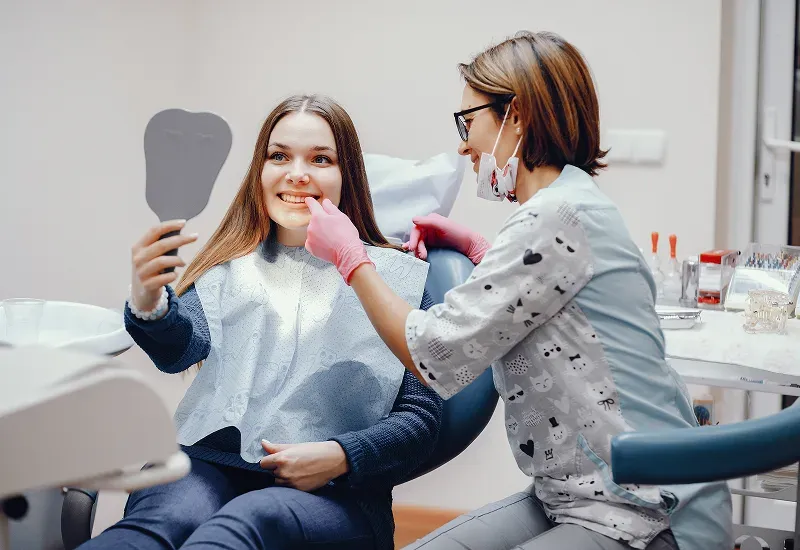
Orthodontists, with their advanced knowledge in biomechanics and facial structure, tend to take a more detailed and personalized approach. They analyze jaw positioning, bite forces, and long-term stability when creating a treatment plan. Their ability to manipulate 3D imaging software with advanced clinical insight often results in a more predictable treatment outcome.
General dentists may rely more heavily on Invisalign’s software to generate standard treatment protocols. While these may be sufficient for mild to moderate cases, they might not account for the complexities involved in more advanced tooth movement.
Managing Case Complexity: Mild vs. Advanced Issues
Invisalign is designed to treat a wide range of orthodontic problems, but the provider’s experience plays a critical role in handling complex cases.
For patients with mild crowding, small gaps, or minor misalignments, both orthodontists and general dentists may be able to provide effective treatment using clear aligners. However, as case complexity increases, the level of planning and correction required also rises.
Orthodontists are better equipped to handle complicated cases involving bite correction, rotated teeth, vertical tooth movement, or jaw discrepancies. They use their understanding of biomechanics and skeletal growth to ensure proper alignment and function, not just cosmetic correction.
General dentists typically focus on simpler, more straightforward cases. If a patient presents with complex alignment issues, they may be referred to a specialist, or the treatment may involve more refinements, longer durations, and less predictability in the outcome.
Clear Aligner Mechanics: Attachments, IPR, and Aligner Fit
Invisalign aligners work in combination with various clinical tools and techniques to guide teeth into their ideal positions. These include the use of attachments, interproximal reduction (IPR), and optimizing aligner fit.
Orthodontists carefully evaluate where to place attachments and how to use IPR to create the space needed for accurate tooth movement. These decisions are based on detailed clinical knowledge of how each tooth responds to pressure and movement over time. This leads to a better fit and higher treatment precision.
General dentists may follow default suggestions provided by Invisalign’s software regarding attachment placement and IPR. While this approach may be effective in many cases, it lacks the personalized adjustments that an orthodontist typically makes during treatment.
Monitoring Progress and Adjusting the Plan
Invisalign treatment requires regular monitoring to ensure that teeth are moving according to plan. The provider’s ability to assess and respond to progress plays a significant role in treatment success.
Orthodontists typically monitor patients more closely and are more comfortable making in-treatment modifications. Their familiarity with treatment challenges allows them to make real-time adjustments that can prevent delays and reduce the need for refinements.
General dentists, particularly those handling a wide variety of dental services, may have less frequent check-ins and limited ability to identify subtle misalignments early. In such cases, mid-treatment corrections may be delayed, potentially leading to extended treatment times.
Technology Adoption and Treatment Tools
Both orthodontists and general dentists use digital tools such as 3D scanners and imaging software to support Invisalign planning. However, orthodontists often integrate these tools with a deeper clinical perspective.
The rise of AI-based treatment planning has enabled more efficient staging of aligner movement. While both provider types use these technologies, orthodontists are more likely to combine them with manual refinements for added precision.
Remote monitoring tools have also grown in popularity, allowing patients to submit progress photos from home. These are especially useful in maintaining continuity of care, but how effectively they are used often depends on the provider’s familiarity with orthodontic-specific workflows.
Cost vs. Value: Making a Practical Choice
Invisalign costs can vary depending on the provider, treatment complexity, and geographic location. General dentists often offer slightly lower pricing for Invisalign treatment, especially for mild cases. This affordability appeals to patients seeking cosmetic improvements without significant alignment issues.
Orthodontists, while sometimes more expensive, offer greater long-term value for patients with moderate to severe misalignment. Their advanced training allows them to optimize the number of aligners, reduce refinements, and create more stable, lasting results. When evaluating cost, it’s important to consider the relationship between case complexity, treatment accuracy, and long-term success rather than only the upfront fee.
Conclusion
Understanding the difference between how orthodontists and general dentists approach Invisalign is essential when choosing the right provider for your needs. While both professionals are qualified to deliver treatment, their levels of experience in tooth movement expertise, case complexity management, and treatment planning differ significantly. Orthodontists bring years of specialized education, allowing them to handle complex cases with greater precision and offer more predictable outcomes. On the other hand, general dentists can be an appropriate and affordable option for patients with mild alignment issues who are seeking cosmetic improvements through clear aligners. The key lies in evaluating your specific case and understanding that Invisalign is not a one-size-fits-all solution. Whether you opt for a general dentist or a dental specialist, choosing a provider who offers customized care, regularly monitors your progress, and leverages the latest in digital technology will ensure your Invisalign journey is both efficient and successful.
Contact your dentist today in Oakland, Dr. Sahota, at One Dental Livermore, to learn more about How Orthodontists and General Dentists Approach Invisalign Differently?
Resource:
Who Is a Good Candidate for Invisalign? A Dentist’s Evaluation Guide
Share This:
Disclaimer
This media/content or any other on this website does not prescribe, recommend, or prevent any treatment or procedure. Therefore, we highly recommend that you get the advice of a qualified dentist or other medical practitioners regarding your specific dental condition.
Discover the difference of personalized care that prioritizes your health and well-being at

Working Hours
Monday: 8:30AM - 5:30PM | Tuesday: 8:30AM - 5:30PM Wednesday: 7:40AM - 4:30PM | Thursday: 8:30AM - 5:30PM Friday: 8:30AM - 5:00PM


