New Patient Offer - Exam, X-Ray & Teeth Cleaning in Just $69


Dental Implants vs Dental Bridges: Which Is Better?

by Dr. Sahota
When a tooth is missing, the question of how to replace it often comes down to two well established options which are dental implants and dental bridges. Both restore the look and function of a missing tooth. Both are widely used across dentistry today. And both have distinct advantages that make them the right choice in different circumstances.
The question of which is "better" doesn't have a single universal answer because it depends on your oral health, bone condition, timeline, budget, and long term goals. What this article offers is a clear, side by side look at both options so you can have a better informed conversation with your dentist.
Understanding Dental Implants
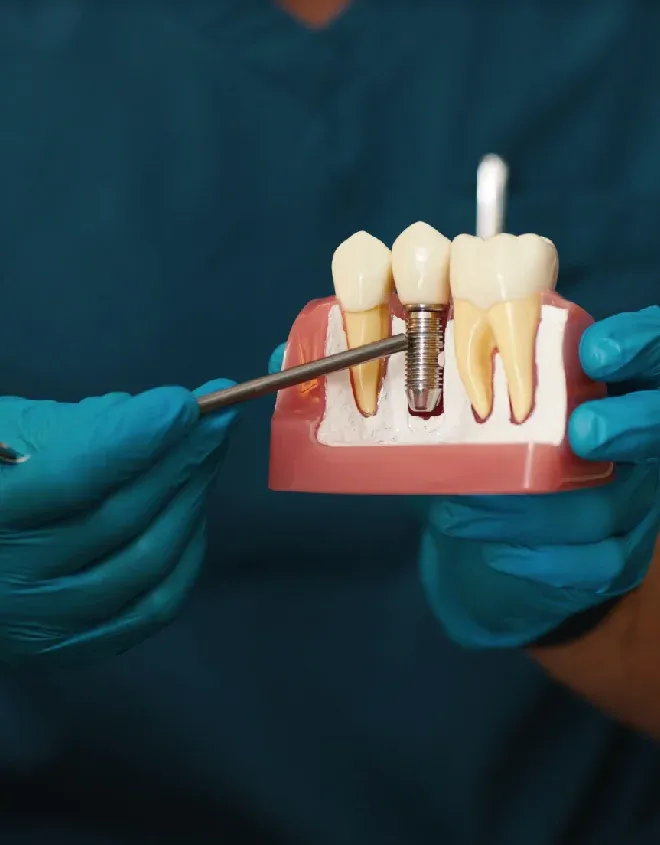
A dental implant is a titanium post surgically placed into the jawbone to serve as an artificial tooth root. Dental implants in Livermore use this implant-supported approach to replace a missing tooth by providing a stable foundation for a custom dental crown. Over a period of several months, the post integrates with the surrounding bone through a process called osseointegration, thereby creating a stable and permanent anchor. A custom dental crown is then attached to the implant, completing the restoration.
For a single missing tooth, single tooth dental implant treatment allows the replacement to function independently without relying on adjacent teeth for support. Unlike a traditional bridge, the neighboring teeth do not need to be reshaped to hold the replacement tooth in place. Because the implant is embedded in the jawbone, it can also help maintain bone volume around the missing tooth site.
Dental implants also offer a long-term solution for patients who want a reliable replacement for missing teeth. With proper oral care and regular dental checkups, implants can provide years of comfort, stability, and improved confidence. Their natural appearance and ability to restore normal chewing function make them one of the most preferred options for tooth replacement.
Understanding Dental Bridges
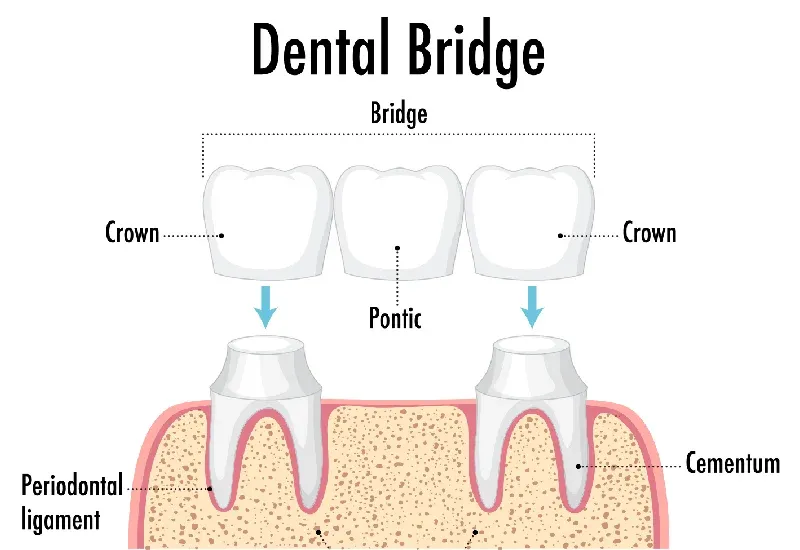
A dental bridge spans the gap left by a missing tooth. Dental bridges in Livermore use an artificial tooth called a pontic to fill the space, typically supported by dental crowns placed on the teeth on either side of the gap. In a traditional fixed bridge, those supporting teeth must be prepared because a portion of their enamel is permanently removed to accommodate the crowns. The ADA information about dental bridges provides additional details about how fixed bridges replace missing teeth.
Bridges don't require surgery and can typically be completed in two dental appointments over two to three weeks. They are a well proven option with decades of clinical history. However, because the bridge rests on adjacent teeth rather than on a root in the bone, it does not prevent the bone loss that occurs in the gap area after tooth loss.
When Dental Implants May Be the Better Choice
Implants are generally considered the gold standard for tooth replacement when the patient has adequate bone density and is in good overall health. They are particularly advantageous when the neighboring teeth are healthy and should not be altered, when the patient is looking for the longest-lasting restoration possible, or when preventing jawbone loss is a priority.
Patients who are non-smokers in good systemic health with sufficient bone at the implant site tend to see the strongest long-term outcomes. For patients who have already experienced some bone loss since extraction, a bone grafting procedure may be needed before implant placement, and your dentist or oral surgeon can evaluate this through imaging.
When a Dental Bridge May Be the Better Choice
Bridges offer a viable path when surgery is not a preferred or feasible option, when the timeline for treatment needs to be shorter, or when the neighboring teeth already require crowns for other dental reasons, because in that case, a bridge makes efficient use of that treatment. Bridges can also be appropriate when bone volume at the missing tooth site has already deteriorated significantly, thereby limiting implant candidacy.
The key tradeoff to understand is that placing crowns on otherwise healthy neighboring teeth involves permanently altering those teeth. This is an important consideration that warrants a thorough discussion with your dentist.
How They Compare: A Detailed Side-by-Side View
| Consideration | Dental Implant | Dental Bridge |
| Adjacent-tooth changes | Does not require reshaping neighboring teeth for support. | Traditional bridges generally require preparation of the supporting teeth. |
| Treatment time | Often takes several months, especially when healing or bone integration is required. | Often completed within a few weeks, depending on the case. |
| Cleaning | Brushed and cleaned around like a natural tooth, with additional care as recommended by your dentist. | Requires cleaning around and underneath the bridge, often with a floss threader or other cleaning aid. |
| Bone support | The implant replaces the tooth root and can help maintain bone at the treatment site | Does not replace the missing tooth root, so it does not provide the same direct stimulation to the underlying bone |
| Expected maintenance | Requires regular brushing, professional dental visits, and monitoring of the implant and surrounding tissues | Requires regular brushing, professional dental visits, and careful cleaning around the bridge and supporting teeth |
| Common reasons for choosing | May be considered when preserving adjacent teeth, replacing the tooth root, or supporting long-term tooth replacement is important | May be considered when a faster restoration is preferred, surgery is not desired or appropriate, or adjacent teeth already need crowns |

"Long term clinical studies have shown that dental implants have a survival rate exceeding 95% at ten years in appropriately selected patients, with many implants lasting well beyond two decades."
FAQ
Still have a Question? Contact Us
In some cases, yes. Though additional evaluation and possibly a bone grafting procedure may be needed if bone loss has occurred under the bridge over time.
The full process typically spans three to nine months, largely due to the healing and osseointegration period between implant placement and crown attachment.
The bridge procedure is performed with local anesthesia. Patients may experience some sensitivity after the preparation appointment, but the process is generally well tolerated.
Without a root in place, the jawbone in the gap area gradually resorbs over time. This can eventually affect the fit of the bridge and the appearance of the gumline.
Age alone is generally not a barrier to implants. Many older adults are excellent candidates, provided they are in good health and have adequate bone support. Your dentist will evaluate suitability based on your individual health profile.
Conclusion
Both dental implants and dental bridges are legitimate and effective options for replacing a missing tooth, and both have helped millions of people restore their smiles and function. The difference lies in how each option integrates with your anatomy, how long it is expected to last, and what impact it has on the surrounding teeth and bone.
For many patients with good bone health and no contraindications, dental implants offer clear long term advantages, particularly around bone preservation and longevity. For patients seeking a faster and surgery free solution in Livermore, bridges remain a proven and practical choice. The right answer depends on your specific situation, which is best assessed through a comprehensive consultation with your dental provider.
Contact your dentist in Livermore, Dr. Sahota, at One Dental Livermore, to learn more about Dental Implants vs Dental Bridges: Which Is Better?
Resource
Share This:
Disclaimer
This media/content or any other on this website does not prescribe, recommend, or prevent any treatment or procedure. Therefore, we highly recommend that you get the advice of a qualified dentist or other medical practitioners regarding your specific dental condition.
Discover the difference of personalized care that prioritizes your health and well-being at

Working Hours
Monday: 8:30AM - 5:30PM | Tuesday: 8:30AM - 5:30PM Wednesday: 7:40AM - 4:30PM | Thursday: 8:30AM - 5:30PM Friday: 8:30AM - 5:00PM


