New Patient Offer - Exam, X-Ray & Teeth Cleaning in Just $69


Dental Crowns vs. Fillings: Key Differences Explained
by

When dealing with tooth decay or damage, many patients ask the same important question: Should I get a crown or a filling? This is a common concern, especially when a tooth is causing discomfort or has visible damage. Understanding the difference between crowns and fillings helps patients make the right dental restoration choice before a minor issue turns into a more serious problem.
Both dental crowns and fillings are widely used in restorative treatments designed to repair damaged teeth, restore function, and relieve discomfort. However, they are used in very different situations depending on the extent of damage, the strength of the remaining tooth structure, and long-term oral health needs. Knowing when to get a crown vs filling allows patients to make informed decisions and protect their natural teeth for as long as possible.
Let’s walk through dental crown vs filling explained, so you understand what each treatment involves, when each is recommended, and which option may be best for your specific dental condition.

Understanding Tooth Decay and Cavity Treatment
Tooth decay begins when bacteria in plaque produce acids that gradually weaken the enamel. Over time, this process leads to the formation of a tooth cavity. In the early stages, decay may not cause noticeable pain, which is why routine dental checkups are so important. When detected early, simple cavity treatment can stop the decay before it spreads.
As decay progresses deeper into the tooth, it affects the dentin and compromises the tooth’s strength. At this stage, stronger restorative dentistry solutions are required to repair the damage and prevent further breakdown. The longer decay is left untreated, the more likely it is that a simple filling will no longer be enough.
Your dentist carefully evaluates how much natural tooth structure remains before recommending either a crown or a filling. The size of the cavity, its depth, the tooth location, and the amount of chewing pressure it handles all play a role in determining the most appropriate treatment.
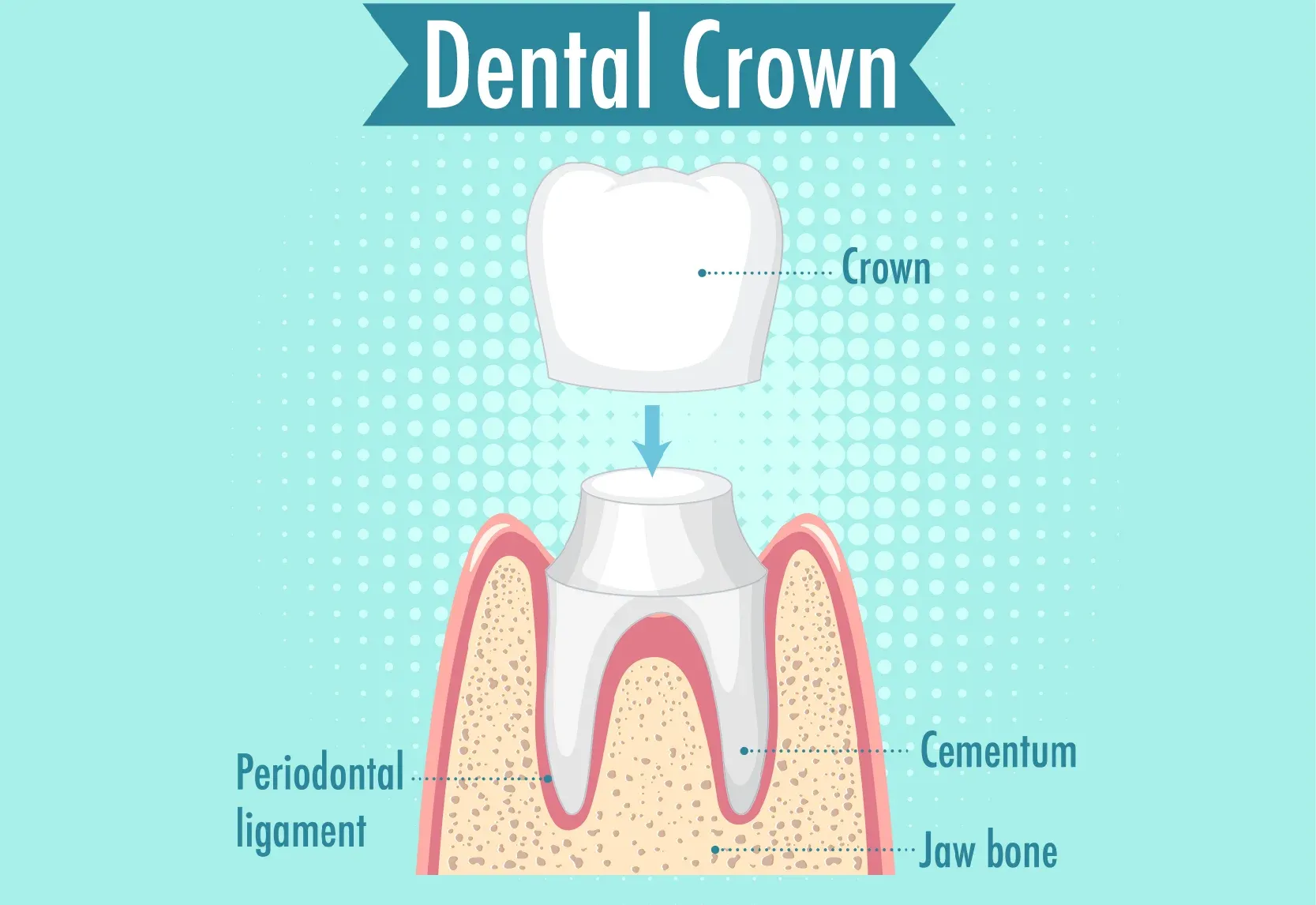
What Is Dental Crown?
Dental crown is a restorative dental treatment used to protect and strengthen a tooth that has been significantly damaged or weakened. After preparing the tooth by removing decay and shaping it, the dentist places a crown over the entire visible portion of the tooth to restore its strength, shape, and function. Crowns help protect the tooth from further damage and allow it to function normally during chewing.
Common crown materials include porcelain, ceramic, metal, or porcelain fused to metal. Porcelain and ceramic crowns are designed to closely match the natural color of teeth, making them a preferred option for visible areas. Dental crowns are most effective when a tooth no longer has enough healthy structure to support a filling.
Crowns are ideal when:
- The tooth has extensive decay or damage
- A large filling has weakened the remaining tooth structure
- The tooth is cracked, fractured, or has undergone root canal treatment
Patients often ask, when is a crown needed instead of a filling? A crown becomes necessary when a filling alone cannot provide sufficient strength or protection. In these cases, full coverage helps prevent fractures and preserves the remaining natural tooth structure.
What Is Dental Filling?
Dental filling is one of the most common methods of tooth decay repair. After removing the decayed portion of the tooth, the dentist fills the space with a restorative material to restore the tooth's shape and function. Fillings help prevent bacteria from re-entering the teeth and stop the decay from progressing.
Common filling materials include amalgam filling and composite resin. Composite fillings are tooth-colored and blend naturally with surrounding teeth, making them a popular choice for visible areas. Fillings are most effective when the tooth still has enough healthy structure to support the restoration.
Fillings are ideal when:
- The cavity is small to moderate
- Most of the natural tooth structure is intact
- The tooth does not require full coverage or reinforcement
Patients often ask, when does a filling need a crown? A filling may no longer be sufficient if it becomes too large, begins to crack, or weakens the surrounding enamel. In these cases, additional protection is needed to prevent the tooth from fracturing.
When a Dental Crown Becomes the Better Option
A dental crown, often made from porcelain or ceramic, is designed to cover the entire visible portion of the tooth. A porcelain crown restores both strength and shape, allowing the tooth to function normally while protecting it from further damage.
Crowns are recommended when:
- A tooth has extensive decay
- Large fillings weaken the remaining tooth structure
- The tooth is cracked, fractured, or treated with a root canal
This is where filling alternatives such as crowns provide long-term stability. When too much of the tooth is compromised, a filling alone may not withstand chewing forces. Crowns act like protective caps, reinforcing the tooth, and preventing future fractures.
Patients comparing crowns or filling often choose crowns when durability and long-term protection are the primary concerns.
Dental Crown vs Filling Cost and Longevity
Another common question patients ask involves dental crown vs filling cost. Fillings are generally more affordable upfront and require less time to place. Crowns, on the other hand, involve more preparation, materials, and sometimes lab work, which increases their cost.
However, longevity is an important factor to consider. Fillings typically last several years but may need replacement over time, especially if they are large or placed on teeth that experience heavy chewing pressure. Crowns often last 10 to 15 years or longer with proper care, making them a strong long-term investment.
So, which is better crown or filling? The answer depends on the severity of the damage and the long-term needs of the tooth, not just the initial cost.

Studies show that teeth restored with dental crowns can last 2–3 times longer than large fillings, especially in teeth exposed to heavy chewing pressure.
Final Thought
Understanding dental crown vs filling empowers patients to act early and protect their smiles. Whether it’s a simple cavity or more advanced tooth damage, timely restorative dentistry can prevent complications and help preserve natural teeth.
Knowing when to choose a crown or a filling allows patients to make confident decisions about their oral health. A personalized consultation ensures the right solution; restoring strength, comfort, and confidence while keeping your natural teeth healthy for years to come.
Resource:
Share This:
Disclaimer
This media/content or any other on this website does not prescribe, recommend, or prevent any treatment or procedure. Therefore, we highly recommend that you get the advice of a qualified dentist or other medical practitioners regarding your specific dental condition.
Discover the difference of personalized care that prioritizes your health and well-being at

Working Hours
Monday: 8:30AM - 5:30PM | Tuesday: 8:30AM - 5:30PM Wednesday: 7:40AM - 4:30PM | Thursday: 8:30AM - 5:30PM Friday: 8:30AM - 5:00PM


